


Stop Cold Meals. Choose Warm Food Again.
You bring food to work or school. You expect heat. Too often you bite into a cold, soggy meal. Food loses taste. Your mood drops. The day thins. This is avoidable.
A smart temperature-controlled lunchbox fixes this. It warms food or holds warmth. It keeps food safe. It fits your routine. It saves time and worry. You eat better. You feel better.
This piece shows why cold meals fail. It explains what these boxes do. It helps you pick the right one. It teaches use and care. It gives meal ideas you will love. Read on. Take back warm food. Save time. Eat well. Start now. Warm meals change your day for good.


Save Money and Stay Warm: The Ultimate Electric Self-Heating Lunch Box
Why Your Lunch Cools Down and Why It Matters
The physics of heat loss
Your hot meal loses heat fast. Warm food gives heat to cold air. It leaks through thin walls. It leaves through lids that don’t seal. Heat also leaves when you stir or open the box. Small containers cool faster. Large masses hold heat longer. A steel vacuum flask can keep soup hot for hours. A thin plastic tub cannot.
Common mistakes you make
You pack food cold. You use thin plastic. You leave gaps in the container. You set the box in a cold bag. You eat after a long commute. You open the lid early and let the steam escape. These small choices speed cooling.
Why flavor and safety both suffer
Taste dulls as food cools. Fats thicken. Sauces flatten. Texture goes limp. Bacteria grow in the danger zone. That zone sits between 40°F and 140°F (4°C and 60°C). The longer your food sits there, the higher the risk of stomach upset. Reheating to a proper temperature kills most bacteria. But you cannot taste comfort in soup that never warmed enough.
Quick, practical steps you can use today
These steps make a big difference. They cut cooling by minutes. They cut risk. They keep taste and heat where they belong.
What a Smart Temperature-Controlled Lunchbox Actually Does
Core functions in plain terms
A smart lunchbox does three things well. It heats your food. It keeps food at a set temperature. It tells you what’s happening. You set a temp or a mode. The box warms. It holds. It reports status on a little screen or an app. You can eat warm food when you want it.
The parts and how they work
A heater or hot plate makes the heat. Sensors read the food or air temp. A controller—often a PID loop—compares the readout to the target. The controller nudges the heater on or off to hold steady. Many boxes use a thermistor. Some use thermocouples for faster reads. Safety parts sit inside too: thermal fuses, cutoffs, and auto-shutoff.
You’ll see units that plug into the wall. Others run on a battery or a car adapter. Some sync with an app. Some have timers and modes like “soup” or “keep warm.”
Real use, real differences
A tiny oven model heats the whole cavity. It behaves like a low-power oven. It can reheat a frozen meal in 20–40 minutes. A warm-vault model relies more on insulation and a low heat pad. It keeps a hot lunch hot for hours with less power. In practice, the oven type suits mains use or office desks. The vault type fits long commutes.
What features matter to you now
Next, you’ll see the everyday gains—better taste, safer meals, and less fuss.
Benefits You Feel Every Day: Taste, Health, and Ease
Taste and texture
Warm food lifts you. It wakes flavors. Rice turns fluffy. Soup goes smooth and soothing. Cold pasta tastes flat. Heat restores the bite in meats and the silk in stews. When you eat warm food, you enjoy it more. You eat slower. You notice the spices. That keeps you full and less likely to snack on fast food.
Health and safety
Heat does work you can see. It kills some germs and slows others. Hold hot food at or above 60°C (140°F) when you can. That cuts risk while you wait to eat. A steady temp also keeps sauces from blooming bacteria. If you nuke a packed meal, stir and check the center. Use a food-safe thermometer once in a while.
Money, waste, and control
Bring your own warm meal and you save. A few swaps cut weekly lunch costs fast. You finish what you pack. You waste less. You skip the vending machine traps. You pick portions. You plate better meals. You shape your diet without guesswork.
Ease and daily wins
Small habits make this tool simple to use. Preheat the box for five minutes. Put dense foods in the middle. Keep sauces sealed. Clean trays right after eating. Pack a spare spoon.
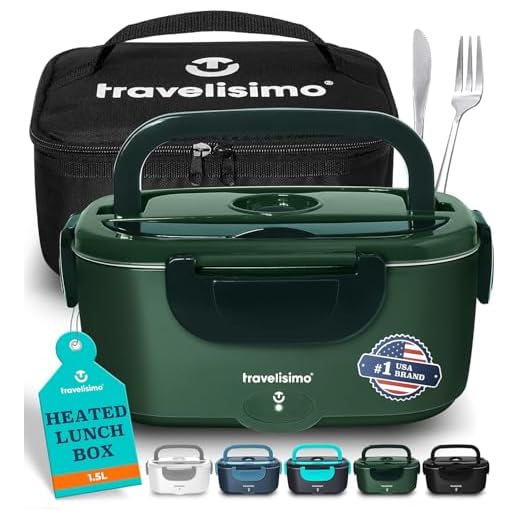
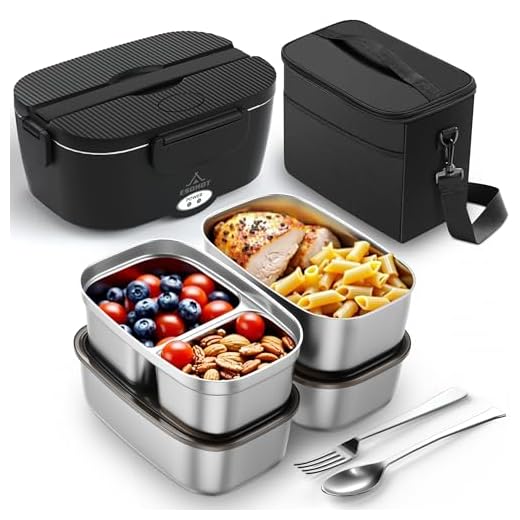
A model like the ESOHOT gives you fast heat and four trays for variety. A smaller unit like the TRAVELISIMO suits a desk and short waits. Choose the fit you will use every day. Use it five times a week and you’ll taste the change.
How to Choose the Right Lunchbox for You
Start with capacity and size
Think about what you eat. A single bowl of soup needs less space than a three-course meal. Choose a box that fits your normal portions, not the largest one on offer. If you pack for kids, go smaller. If you pack for two, get a multi-tray set.
Pick the right power option
Do you sit at a desk or drive a long route? Choose plug-in for office life, car-adapter for commutes, or battery for parks and trains. Battery models give freedom. Plug models give steady heat.

Check temperature range and accuracy
Look for clear specs. A good unit holds 60–75°C (140–167°F). A tight thermostat keeps food safe and tasty. Read reviews for real-world readings. One user report beats specs; another lagged by 10°C. Trust verified tests.
Safety, certifications, and material
Find food-safe plastics or stainless steel. Look for CE, UL, or RoHS marks. Insulation should be fire-resistant. Child-lock lids matter if you carry hot stew.
Portability, weight, and seals
Try to lift it before you buy. Heavy insulation warms but adds weight. Seek tight lids and silicone seals. Leak-proof tops save shirts and bags. Real commute tests show sealed boxes survive a tossed bag.
Cleaning and removable parts
Removable trays make life easy. Dishwasher-safe parts cut cleanup time. Avoid glued liners you can’t reach. Rinse within hours to stop smells.
Speed, hold time, noise, and smell
Check heat-up time and how long it keeps heat. Note fan noise in reviews. Some boxes hum; some are silent. Smell retention varies by liner and material.
Build, warranty, and price
Pay for what you use. A good warranty tells you the maker stands behind the product. Cheap units can fail fast. Mid-price models often hit the sweet spot.
Short checklist:
Match these to your day. Pick what you will use.
How to Use and Care for Your Smart Lunchbox
Daily use: a simple routine
Charge the battery the night before. Preheat the box for 5–10 minutes if you want hot food fast. Pack hot food hot. Pack cold food cold. Place dense items — rice, stew, pasta — near the heater. Put delicate items — salad, fruit — in a cooler compartment. Seal liquids in a cup or jar with a tight lid. Don’t overfill. Leave a little air space for steam. Close locks firmly. Start the heater only after you close the lid.
A handy power pick

Cleaning and care
Let the unit cool and unplug it. Remove trays and gaskets. Wash trays after each use. Wipe seals and vent areas with a damp cloth. Avoid abrasive pads and harsh cleaners. Use mild soap. Rinse well. Dry all parts before reassembly. Replace worn gaskets to keep the box leak-proof. Store the unit open and dry. Keep the power module away from water. Do not submerge electrical parts.
Quick fixes for common hiccups
Safety and kid tips
Keep cords neat. Use only the maker’s charger. Inspect wiring each month. Let hot surfaces cool before opening. If kids use the box, show them how. Watch them the first few times.
Do this. You will save time. You will eat warmer meals. The box will last longer.
Meal Ideas and Packing Tips That Work Every Day
Choose foods that reheat well
Pick meals that take heat without falling apart. Grains, stews, roasted veg, curries, and chili hold texture. Pasta and rice reheat cleanly if you add a splash of water or oil. Soups and steamable fish warm through fast. Pack single-serve bowls. They heat evenly.
Containers and gear
Use metal or heat-safe glass for best results. Thin plastic can warp over time. A tight jar or cup keeps sauces from leaking. Use a small digital scale to portion by weight. That avoids guesswork and saves calories.

Simple packing rules
Quick recipes and plans
Try one plan each day this week. Watch how warm meals change your day. Then read the final notes.
Warm Meals, Simple Habits, Better Days
You can stop eating cold food. A smart lunchbox gives heat, safety, and control. Pick a model that fits your life. Use it well. Care for it. Pack the right meals. Eat when you want. Taste returns. So does comfort. Your lunch will be a small victory. It will lift the rest of the day.
Try one. Start simple. Test a few recipes. Make warm meals part of your routine. You will save time. You will eat better. You will feel steadier. Live warm. Live well. Start today and change how you eat daily.



I like the meal ideas section. Simple curries and grain bowls work best for me. Curious: anyone tried the Dealusy 100-pack for weekly prep? Seems like overkill but appealing for busy weeks.
Dealusy is handy if you prep lots of different combos. See ‘Meal Ideas and Packing Tips’ for storage and labeling suggestions.
I use the Dealusy set — it’s actually great for dividing meals and freezing. Pro tip: label lids with day names.
Practical question: for office workers who eat at their desk, which models are quiet and low-profile? I don’t want an LED circus or loud fans disturbing coworkers.
I use a small Kimfead and it’s whisper-quiet. The display is the only flashy part, but it dims after a bit.
Look for models without loud fans and with dimmable or simple displays. Kimfead is reasonably quiet, and some DUPASU models are low-noise. Also, tape over bright LEDs or place the box under your desk if the light bothers you — but check ventilation requirements first.
If you’re really stealthy, thermos + hot water still wins for quietness lol
I’m considering the DUPASU 100W vs the TRAVELISIMO 80W. Does a higher wattage always mean better/sooner heat? Or does insulation and container design matter more?
Wattage affects how quickly the unit heats, but insulation, container material, and design are equally important for retention. A well-insulated 80W can outperform a poorly insulated 100W in real-world use.
Exactly. I picked TRAVELISIMO for stainless build + insulation over raw wattage and was happy with results.
LOL at the idea of reintroducing warm food like it’s a revolution 😂
But serious: I’m a builder and take my lunch to construction sites. Which of these would survive dust, drops, and zero outlets? ODSD 24000mAh looks like it could handle it but it’s bulky. Any survival tips?
If it’s really rough handling, consider a small pelican-style case for the lunchbox inside your bag. Overkill but saved my lunch once 😂
One more tip: avoid leaving the battery fully drained when storing — that helps batteries last longer in heavy-use scenarios.
For rugged use, cordless high-capacity units (like ODSD 24000mAh) are best because you won’t rely on outlets. Also look for models with sturdy outer shells and secure latches. ‘How to Choose’ mentions build materials and portability features to consider.
I bring mine to fieldwork sometimes — wrap the lunchbox in an insulated bag to protect from dust and drop shocks. Works surprisingly well.
TRAVELISIMO stainless models are more durable than thin plastic ones. Worth the extra weight for fieldwork imo.
Also consider keeping a cheap emergency thermos as backup — if the main box fails, you still got something hot-ish.
Anyone tried cleaning the stainless steel models? The TRAVELISIMO looks nice but I’m worried about smells and tight lids. Article mentions care tips but I’d like real user input.
Funny story: I tried to warm frozen leftovers in a cheap electric box and ended up with half-hot, half-cold chaos. Since then I stick to pre-thawing or using higher-power models like ESOHOT for dense foods. Also, meal-prep tip: dry rice + steamy curry = magic.
This is why I stick to leftovers that reheat evenly — no surprises at lunch 😂
Pre-thawing is underrated. I microwave for a minute at home if it’s frozen solid and then transfer to the lunchbox.
Also stirring mid-way helps if you can. But yeah, choose a model with good even heating.
Thanks for the anecdote — highlights the importance of pairing food type with the right model and using pre-thaw/preheat tactics described in ‘Meal Ideas and Packing Tips.’
Short and sweet: I hate cleaning clutter. Article is great but needs a one-liner on which unit is easiest to clean daily.
Good call — easiest to clean tend to be stainless-steel inner pots (TRAVELISIMO) and units with removable compartments. I’ll add a quick ‘Ease of cleaning’ bullet to the article.
I bought the ESOHOT 120W four-container set for meal-prep and it’s been great for separating sauces and sides. A couple of practical notes:
1) The higher power really heats up fast, but you don’t always need max power.
2) Clean ASAP after use — tangy sauces will leave marks.
3) It’s a bit heavier than I expected, but worth it for weekday lunches.
Thanks for sharing specifics, Linda — your tip about not always using max power aligns with the ‘How to Use’ section and helps prolong battery life and reduce energy use.
Good to know about weight. I’m always climbing stairs at work — might opt for a cordless lighter model like the DUPASU plug-in alternatives or the Yofidra cordless.
Do you leave it plugged in at work or use it cordless? Curious about practicality.
I have a 4-container too, and I find putting the denser food (rice/pasta) in the largest container helps even heat distribution.
Bought a Kimfead 80W with display last month. Pros: accurate temp control, compact. Cons: small capacity, and the display lights up a lot (annoying in dim offices). A few packing tips:
– Put sauces in tiny Dealusy containers inside larger compartment
– Use silicone liners for easy cleanup
– Don’t overfill — steam needs room to circulate
Love the silicone liner idea — I put one in my DUPASU and cleaning is 10x easier.
If capacity is a priority, ESOHOT and multi-container sets tend to be larger; TRAVELISIMO stainless options also offer more volume. See the ‘How to Choose’ section for trade-offs between capacity and portability.
Thanks for sharing specifics, Ben — your packing tips are practical and align with the ‘Meal Ideas and Packing Tips’ section. Good point about leaving room for steam.
Kimfead sounds perfect for my desk days, but I need something for sites. Maybe a combo like others suggested.
Which model would you recommend if someone needs more capacity though? I keep seeing ESOHOT for bigger options.
Neutral take: these tech lunchboxes are cool but add complexity. I miss the simplicity of a thermos. That said, the convenience of a full hot meal is tempting. Anyone switched completely from thermos to an electric lunchbox?
Great point — the article’s ‘Warm Meals, Simple Habits’ section suggests combining tools: thermos for soups, electric boxes for multi-component meals.
I did the same; electric for reheating leftovers, thermos for hot drinks. Works well.
Switched last year — I use a small electric box for variety, but keep a thermos for soups when I want longer retention. Both have their place.
This article got me thinking — I used to bring a sad sandwich every day, now I want warm stews. A few notes from personal use:
– If you pack soups, use leak-proof inner containers.
– Preheat the metal insert with hot water for 5–10 min (game changer).
– The Dealusy meal prep containers are handy for portioning.
Also: anyone else annoyed by the chunky displays on some models? Kimfead’s display looks clunky but seems functional.
Totally agree on preheating. I do the hot water trick while I’m making my breakfast and it saves sooo much time later.
Good point about microwave safety — check the container specs. I added a note in the article about choosing microwave-safe prep containers when using reheatable lunchboxes.
I use Dealusy containers too — cheap and tough. Just be careful with microwaving plastics if they aren’t microwave-safe.
Kimfead display -> I found it useful for setting temps exactly. But yeah, not the prettiest UI 😅
Thanks for the practical tips, Priya — the preheat trick is mentioned in ‘How to Use and Care’ but your step-by-step experience is super helpful. Display preferences are personal; Kimfead gives precise control, but some prefer simpler dials.
Love the idea — sick of cold lunches at the office. Was researching the DUPASU 100W and the Yofidra cordless option. Quick q: how long do these actually hold heat for a proper hot meal? Battery life matters if I take long shifts.
Great question, Emily — battery life varies a lot. The Yofidra cordless tends to be good for a few hours when fully charged, whereas plugged-in models like the DUPASU rely on being connected or preheated. Check the “How to Choose” and “How to Use and Care” sections for tips on maximizing heat retention (preheat containers, insulate, avoid opening frequently).
I had a Yofidra for a month — it kept a rice+chicken lunch warm for about 4 hours on medium. If you need hotter for longer, ODSD 24000mAh is more of a power-house from what I’ve seen.
Also depends on ambient temp. In winter mine lasted longer 😂
Skeptical but curious. Are these safe long-term? Heard heating plastic repeatedly can be bad. Article touched on health but not depth.
Fair concern. Choose stainless-steel internal containers (TRAVELISIMO, ESOHOT sets often have stainless options) and certified BPA-free plastics when provided. The ‘Benefits You Feel’ and ‘How to Choose’ sections recommend avoiding low-quality plastics for repeated heating.
Anyone tried the ODSD cordless? I saw it’s got 24000mAh — seems over the top but maybe worth it for long travel days. Also, are there any airline restrictions or commuting rules about carrying these in backpacks?