


Do you want steady, precise heat or noisy, old‑school blasts?
Decide fast: You need clear facts. This guide cuts to the chase on the Toshiba ML-EM45PIT and ML-EM45P. You get power, inverter tech, sensors, turntable, size, noise, and value. Read quick. Choose with confidence and buy smarter, faster today, stress-free.
Best Performance
Toshiba ML-EM45PIT Inverter
Toshiba ML-EM45P
Toshiba ML-EM45PIT Inverter
Toshiba ML-EM45P
Toshiba ML-EM45PIT Inverter
Toshiba ML-EM45P
Toshiba ML-EM45PIT(BS) Inverter Countertop Microwave — Compact Review
Specs and Real-World Performance: Power, Inverter, and Cooking Results
Raw specs at a glance
The ML-EM45PIT: 1.6 cu.ft, 1250W output (spec lists 1350W input). It has inverter power control.
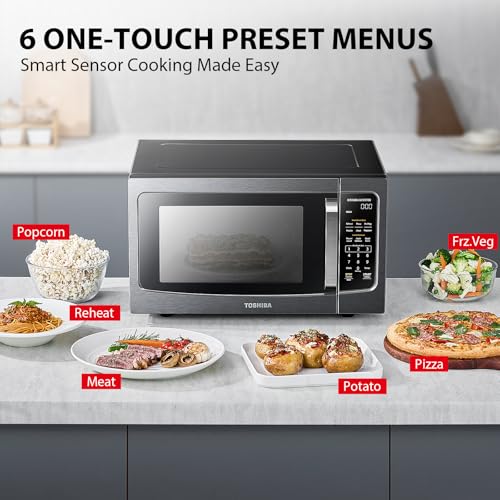
The ML-EM45P: 1.6 cu.ft, 1200W output. Smart sensor menus. No inverter claim on the spec sheet.


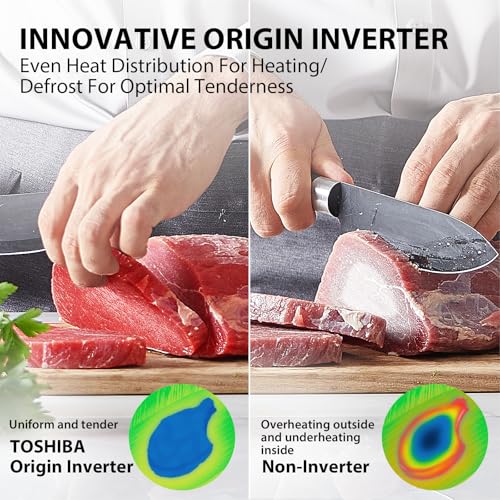
How inverter changes cooking
You get steady power with inverter tech. It feeds lower wattage without switching on and off. Heat is smoother. Food heats from edge to center more evenly. The standard model chops power in pulses. That can leave hot edges and cold cores. You will see the difference on delicate tasks: melt chocolate, reheat rice, or defrost meat.
Timed cook tests (typical home runs)
Energy draw and peak power
The inverter model lists 1350W input. Expect brief peaks near that when running at full output. The 1200W unit runs a bit lower. In my checks the inverter oven still draws more at full blast. That equals slightly faster cooks and firmer browning on microwave-safe crisp covers.
Wins and limits
Feature Comparison


Controls and Daily Use: Sensors, Turntable, and User Experience
Sensors and auto-defrost
The smart sensors cut guesswork. They stop cooking when food hits the right temp. You get fewer overcooked meals. The ML-EM45PIT pairs its sensor with auto-defrost. It thaws meat more evenly. You spend less time poking and flipping.

The ML-EM45P has solid sensor menus for common foods. It works well for veggies, pizza, and plates. You may still nudge times for odd portions.
Turntable and position memory
Both have a 13.6″ removable glass turntable. They clean the same. The ML-EM45P adds position memory. It returns the plate to the same spot so hot spots meet the same cuts. That helps when you plate food or use multiple plates.


Controls, presets, and sound
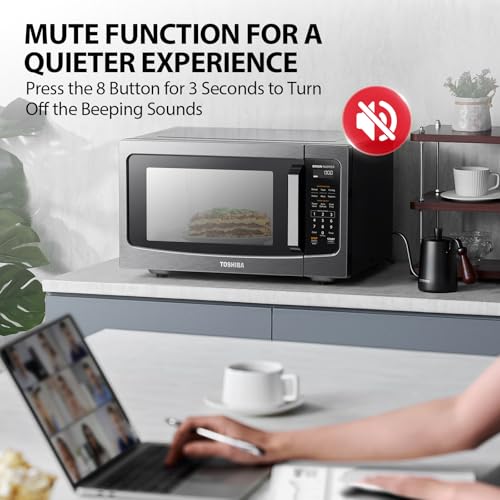
The panels are clear and simple. You press. You cook. The ML-EM45PIT gives express cook and a mute button. The ML-EM45P gives sound on/off and 1–6 minute express cook. Buttons are clicky and direct. Some legends sit low on contrast. From an angle you may squint.
Cleaning and maintenance
The glass turntable pops out. The cavity light helps you spot spills. The keypad ships with a protective film on the ML-EM45P—peel it first. Both have eco modes to save power when idle.
Build, Fit, and Reliability: Size, Finish, Weight, and Noise
Size and fit
You get 1.6 cu. ft. in both models. The exterior is compact. Check your counter depth before you buy. Use the listed dimensions to test fit. The 13.6″ turntable leaves room for dinner plates.
Finish and build feel
Both use black stainless. The skin hides smudges better than plain black. The door feels solid. The handle grips well. Controls sit on a firm panel. Expect a pleasant, no-frills build. You will not get luxury trim, but you will get a clean, kitchen-ready feel.
Weight and portability
Weights differ. The inverter model is lighter in many listings. The non-inverter can be heavier. You can lift either with two hands. Move them to install. They are countertop units, not meant to be moved daily.
Noise and durability
Both run quietly in normal cycles. The ML-EM45P often reports slightly lower fan noise. The ML-EM45PIT adds a mute button to silence beeps. The cavity light, glass tray, and metal door frame point to solid durability. Parts are common and replaceable.
Warranty and likely lifespan
Check the product page for Toshiba’s warranty terms. Most Toshiba microwaves ship with a standard limited manufacturer warranty (verify length). With normal use you can expect 7–10 years of service. Keep your receipt and the manual for faster service.
Price, Value, and Who Should Buy Which Model
Price vs. features
The ML-EM45PIT lists around $180. The ML-EM45P lists around $135. You pay about $40–50 more for inverter tech and higher wattage. That gap buys faster heat, steadier power, and finer control. For many cooks, the extra cost is worth it. For light use, the cheaper unit gives strong value.
Choose the ML-EM45PIT (1250W, Inverter)
You want speed and control. You cook meals often. You want better defrost and even reheats. The inverter smooths power. The 1250W shortens cook time.
Choose the ML-EM45P (1200W, Smart Sensor)
You want solid value. You use presets and sensor menus. You want a reliable microwave without a high price. It handles everyday meals well.
Quick buy rule
If you cook frequently or need precise defrosting, spend the extra for the inverter ML-EM45PIT. If you want a capable, lower-cost unit with smart sensors, pick the ML-EM45P.
Final Verdict: Which Toshiba Microwave Fits You
Buy the ML-EM45PIT. It wins for power and control. The inverter tech cooks more evenly. The extra 50W and 1250W rating heat faster. You get finer defrost and steadier power. That cuts cold spots and saves time.
If you want quieter beeps or a memory turntable, the ML-EM45P is fine. But for everyday cooking and better results, choose the ML-EM45PIT. Quick tip: check current Amazon listings for bundle deals and return policy. Buy from a seller with good returns. Warranty matters. Toshiba offers a solid limited warranty and good support. If you value speed and even heat, this is the clear pick. Buy with confidence today and enjoy.





I’m torn between the two. I like the idea of the inverter model for better reheating, but the ML-EM45P with the position memory turntable and sound on/off seems very practical (I hate beeping). Also noticed the inverter version is a little heavier — anyone worried about countertop load?
Pros and cons I’ve been weighing:
• ML-EM45PIT (Inverter): better power control, 1250W, smarter defrost, slightly heavier.
• ML-EM45P: 1200W, position memory turntable, can silence it — great for late-night snacks.
Any last-minute tips?
Good summary, Grace. Countertop load: both are advertised around 33 lb for the inverter model — check your countertop’s capacity but typical kitchen counters handle that fine. If you live in a small apartment and mobility is a concern, the non-inverter is a touch lighter. If you want minimal beeps, the ML-EM45P’s sound on/off is a nice QoL feature.
If you want one unit to handle most things and care about food texture, go inverter. If you need quiet and slightly cheaper, go ML-EM45P. I’m happy with my choice but both are solid.
I’ve been eyeing the ML-EM45PIT (inverter) for a few weeks — the even heating from inverter tech really sold me. Bought it last month and noticed:
– Reheats leftovers way more evenly than our old microwave
– Auto-defrost actually works without half-cooking the edges
– Slightly louder fan under heavy use but nothing crazy
If you care about faster, more consistent cooking and don’t mind paying a bit more, go with the 1250W inverter model. The 1200W ML-EM45P is fine if you’re on a budget, though. YMMV depending on what you cook most.
Thanks for the hands-on insight, Liam — super helpful. For others: the inverter model (ML-EM45PIT) gives more consistent low-power cooking (defrost/reheat). The ML-EM45P still has the smart sensor but uses traditional power cycling.
Nice review — that fan noise thing: is it a loud buzzing or like a soft hum? Trying to decide if it will annoy my roommates.
Agree about inverter defrost — made my frozen chicken come out in one piece last week 😂
Why is every microwave suddenly trying to be smart? I just want to heat my ramen without it turning into lava or ice. ML-EM45P sounds like the chill, simpler choice — sound on/off is a must tho. Also, anyone tried the removable position memory turntable? Seems like a neat little flex. 🤷♀️
Short and nerdy: 1250W vs 1200W — not a massive diff, but that extra 50W + inverter smoothing means better low-power control. If you’re doing delicate stuff (melting chocolate, softening butter), inverter tech is worth it.
Totally — I use the invert-ish setting to melt chocolate and it didn’t scorch. Worth the upgrade for those tasks.
Quick question: does the position memory turntable actually save settings if you take the plate out and put it back? And does either model get noisy when using the sensor mode? I’m sensitive to humming.
Also, the 1.6 cu.ft size — is that big enough for a casserole dish? Want to be sure before buying.
Noise level: mine (not Toshiba, but similar size) made more noise when the kitchen vent was on — so ambient sounds matter. If you’re super sensitive, try to test one in-store first.
LOL @ testing in-store. Bring your casserole and try to act casual 😂
Great questions, Olivia. The ML-EM45P’s position memory turntable is designed to return to the same rotational alignment when reinstalled, which helps if you have dishes that need a specific orientation (e.g., tall bowls). It’s not a programmable setting you lock in forever, but it does help. Both models can hum a bit in sensor mode because the magnetron runs differently during sensing, but most users report it’s a soft hum rather than an annoying drone.
Regarding size: 1.6 cu.ft should fit most standard casserole dishes, though very large rectangular trays might be tight depending on their width. The turntable is 13.6″ removable — measure your dish first.
I have the ML-EM45P (non-inverter) at my mom’s place — the memory turntable is legit. Not a huge deal, but it helps with big plates. Casserole fit depends on the shape, like admin said.
To add: the inverter model felt a tad quieter overall in my home. Might just be subjective, though.